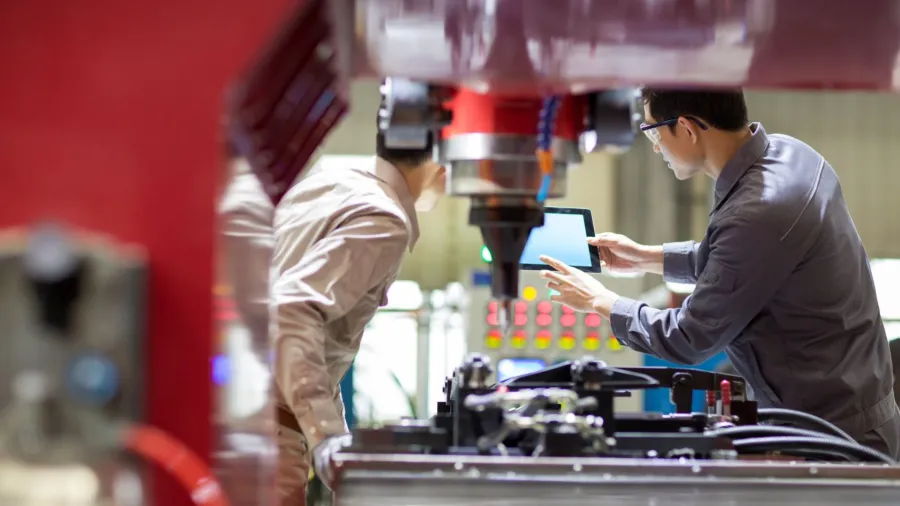
Many industrial losses fall outside traditional insurance policies.
Asia-Pacific (APAC) manufacturers are becoming more vulnerable to cyberattacks that can damage factories and disrupt production, but many may not have insurance covering the resulting physical losses.
“As operational technology becomes more integrated with IT (information technology) systems, cyber-attacks are increasingly targeting systems that control industrial activity, raising the potential for disruption to physical operations impacting machinery, facilities and production processes,” Georgie Furness-Smith, a cyber underwriter at Tokio Marine Kiln Group Ltd. (TMK) Asia, said in a June statement.
She said cyber risks remain underinsured partly because big industrial losses have been relatively uncommon, even as attacks on operational technology continue to increase.
APAC region accounts for more than half of global manufacturing output and posted about one-third of worldwide cyber incidents in 2024, the highest share of any region, TMK said in a report.
Manufacturing was the most targeted industry, whilst system intrusion attacks accounted for about 80% of breaches, up from 38% a year earlier.
TMK said many standard cyber insurance policies exclude physical damage, whilst property insurance might exclude losses caused by cyber incidents. As a result, companies could face uninsured repair costs and business interruption after an attack.
It added that manufacturers, logistics operators, healthcare providers, utilities, and power generators face growing exposure as they adopt more connected equipment, automation, and artificial intelligence.
Munich Reinsurance Company also identified a protection gap amongst consumers.
Its Global Cyber Risk and Insurance Survey 2026 found that 58% of respondents had experienced or been affected by a cyberattack, including online shopping fraud, malware, fraudulent bank transfers, data theft, and identity theft.
Despite that, 41% said they neither had nor intended to buy personal cyber insurance. Amongst those without cover, 32% were unaware such products existed, 31% considered them too expensive, and 19% did not understand what they covered.
Munich Re estimated global fraud losses at as much as $500b annually, including both digital and nondigital fraud.
Questions to ponder:
- How can manufacturers close cyber insurance gaps as factories become more connected and automated?
- Should cyber insurance evolve to cover physical damage caused by attacks on industrial systems?
- What can insurers do to improve awareness and adoption of cyber insurance amongst businesses and consumers?